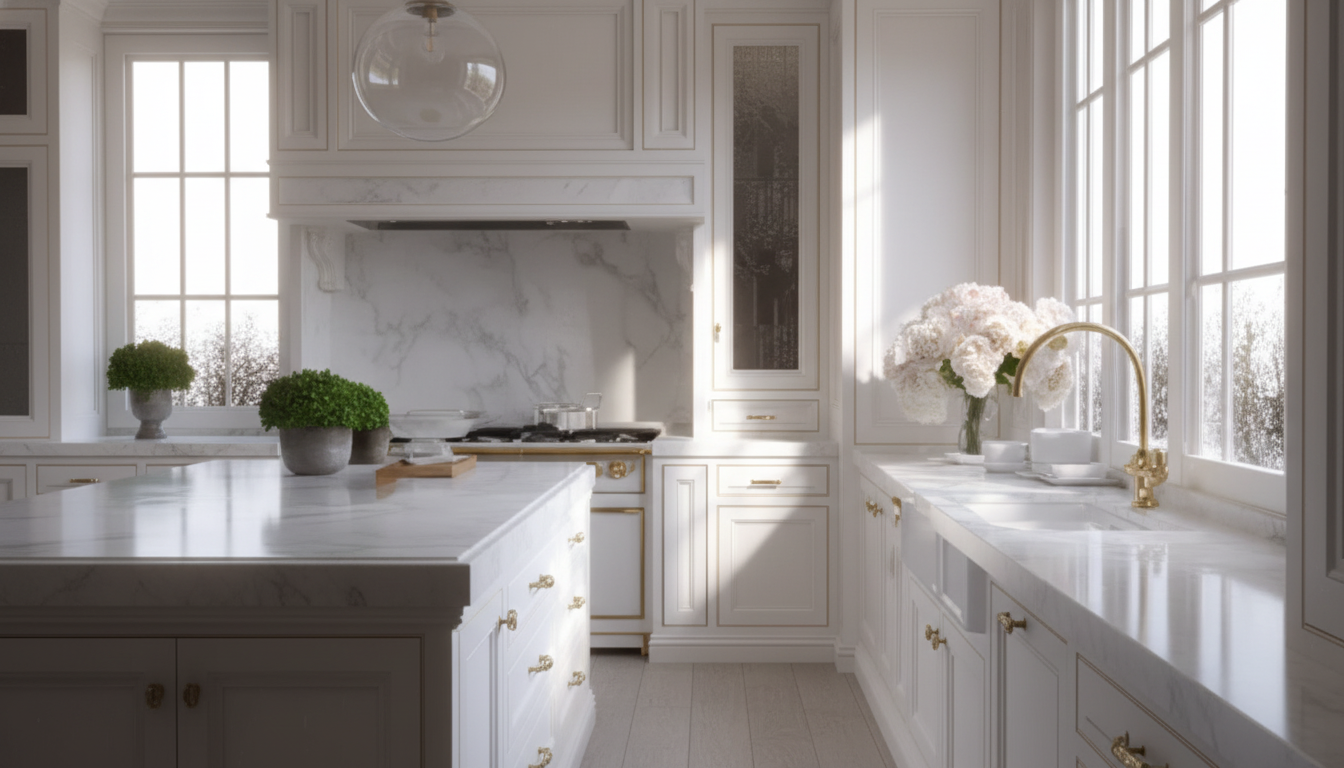
A traditional kitchen can feel warm and familiar without sacrificing the clean lines, performance, and convenience expected in a modern home. The most successful spaces balance heritage-friendly elements—like framed cabinetry, natural materials, and timeless silhouettes—with contemporary upgrades such as smart storage, layered lighting, and durable low-fuss finishes. The goal is a room that feels collected and calm, not themed: classic at first glance, effortless in everyday use.
The “sweet spot” happens when the foundation stays traditional, while the daily experience feels current. Start with classic anchors—framed or Shaker-style cabinets, simple crown details, and a restrained palette—to create a timeless baseline. Then add modern ease through function: soft-close hardware, deep drawers for pots and pans, pull-out organizers, and an integrated recycling setup that keeps routines smooth.
Mix eras deliberately. Choose one or two heritage notes—like a bridge faucet, beadboard detail, or unlacquered brass accent—then pair them with streamlined surfaces such as a slab-style backsplash tile or minimal pendants. Fewer, better materials also help: repeating the same finishes across the room reduces visual noise and makes a “collected over time” look feel intentional. To avoid a heavy, overly traditional feel, add contrast with a lighter countertop, a reflective backsplash, or a small zone of open shelving.
Even the prettiest kitchen feels dated if it doesn’t flow. Prioritize work zones—prep, cooking, and cleanup—so the room supports weeknight speed as well as weekend hosting. Classic layouts still perform beautifully when planned well: an L-shape with an island, a U-shape with a peninsula, or a galley that uses one wall for tall pantry storage and appliances.
Right-size the island so it enhances movement rather than creating bottlenecks. Clearances matter for traffic and for opening appliances and drawers; the NKBA’s kitchen planning guidance is a helpful reference point for spacing and safety considerations (NKBA Kitchen & Bathroom Planning Guidelines). If seating squeezes your work triangle, choose a slimmer overhang, shift seating to a nearby banquette, or skip it and prioritize prep space.
Finally, make storage architectural. Tall pantry cabinets, appliance garages, and dedicated landing zones (for groceries, mail, or a laptop) keep counters calm without losing charm. Use sightlines to your advantage: place one statement piece—a range hood, a window, or a vintage-inspired light—where it naturally anchors the room.
Cabinet profiles quietly set the entire mood. Shaker doors are the most flexible (traditional enough for warmth, simple enough for modern pairings). Raised panel leans more formal and classic, while inset doors deliver a tailored, furniture-like feel that reads upscale and timeless.
For color, consider paint and wood together: painted lowers with wood uppers—or a warm wood island—adds depth without pushing the kitchen into “dated” territory. Hardware should stay cohesive: classic shapes (bin pulls, simple knobs, or thin-bar pulls) in one finish keep the look calm. Modern touches can be nearly invisible: integrated outlets, discreet under-cabinet lighting channels, and concealed hinges preserve a classic face while updating function.
If you want a quick, high-impact upgrade, consistency beats variety. Repeating the same knob/pull family throughout avoids the busy, catalog-like effect that can make traditional details feel fussy.
Choose surfaces that look right with traditional forms but hold up to modern life. For countertops, quartz offers low maintenance with a classic look, while natural stone brings depth and patina over time. Butcher block works beautifully as a warm accent surface—especially on an island or a coffee station—where its softer wear feels intentional.
Pendants should have classic silhouettes—simple domes, schoolhouse forms, or lantern-inspired shapes—finished cleanly so they don’t compete with cabinetry details. For performance, upgrade the faucet: a bridge or gooseneck reads traditional, while pull-down sprayers and high-arc designs deliver modern convenience. Keep bulb color temperature consistent and warm for a welcoming tone, and consider LEDs for efficiency and longevity (U.S. Department of Energy: LED Lighting).
| Area | Classic Anchor | Modern Upgrade | Done |
|---|---|---|---|
| Cabinetry | Shaker or inset doors | Soft-close hinges/drawers | □ |
| Counters | Stone-look surface | Low-maintenance finish | □ |
| Backsplash | Subway or handmade-look tile | Simple grout line + easy-clean sealer | □ |
| Lighting | Lantern/dome pendant style | LED task lighting + dimmers | □ |
| Hardware | Traditional knob/pull shape | One consistent finish | □ |
| Styling | Wood, linen, ceramic accents | Clear counters + curated tray | □ |
Focus on lighting (add dimmers and task lighting), update hardware to one consistent finish, and edit countertop clutter. Swapping dated fixtures for cleaner silhouettes preserves the classic base while making the space feel current.
Yes—stick to one main finish plus one accent, and repeat each finish at least twice for balance. Keep shapes cohesive so the mix feels intentional rather than random.
Subway tile in a balanced size, handmade-look ceramic with subtle variation, or a simple stone slab all stay classic. Pair them with understated grout and avoid overly busy patterns if the room already has prominent traditional detailing.






Leave a comment