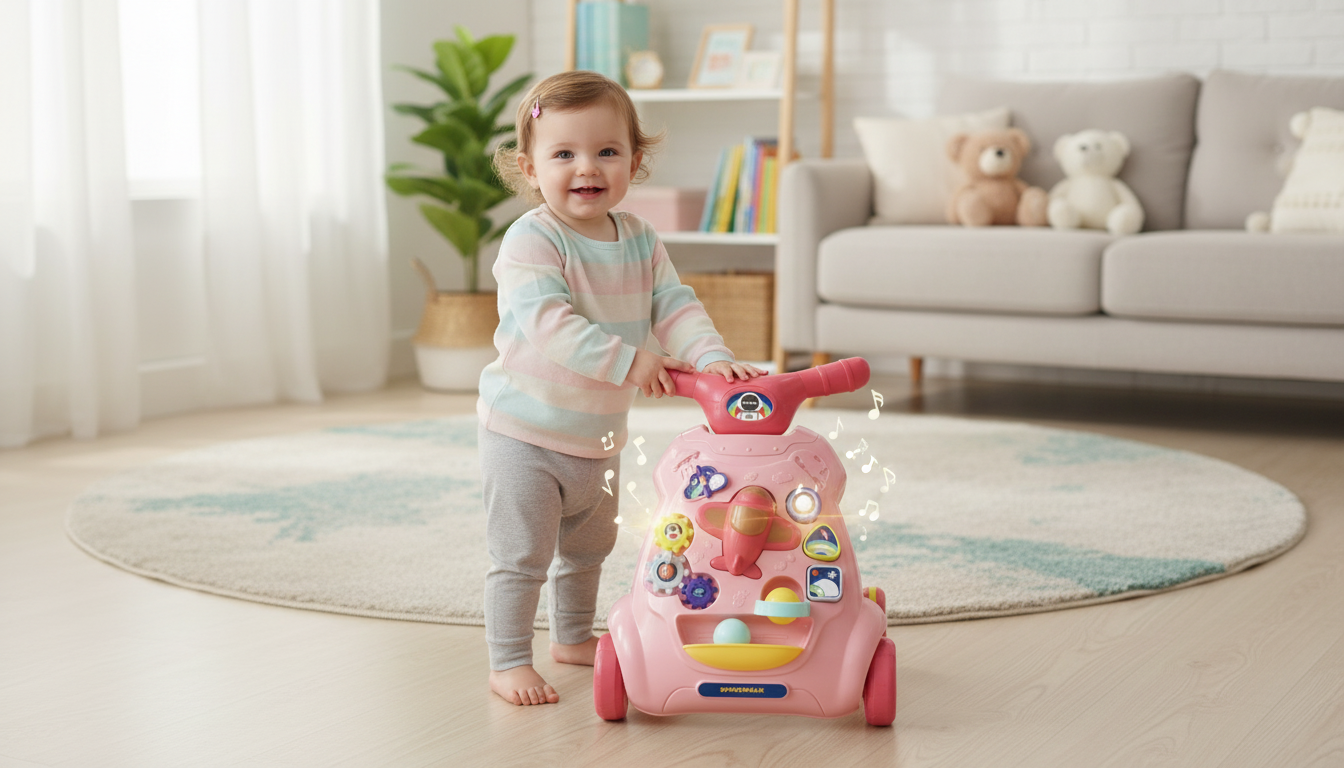
A push walker that plays music and lights up can turn early steps into an engaging routine—part mobility support, part cause-and-effect toy. The right setup helps toddlers practice balance while also giving them “I did it!” moments when a button press triggers sound or a light show. Below is what to look for, how to use one safely, and how the Toddler Music Walker with Lights and Sounds can fit into everyday play for new walkers and confident cruisers. For more guidance, see Our Favorite Music and Light Toys | WonderBaby.org.
When toddlers move from pulling up to standing into cruising and first steps, they’re building skills that stack quickly. A push walker can add structure to that practice while keeping playtime upbeat. For further reading, see Most Awesome Toys and Gifts For 1 Year Old Boys 2021.
For a helpful frame of reference on typical developmental progress around the first birthday, the CDC milestones guide can provide context for what many children are working on during this phase (while remembering every child develops on their own timeline): CDC — Important Milestones: Your Baby By 1 Year.
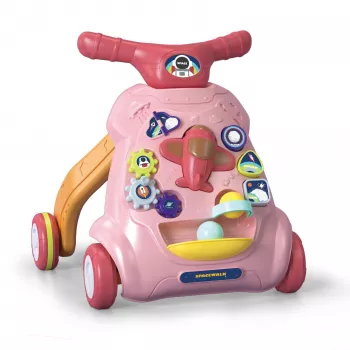
This style of walker is designed to do two jobs at once: support movement practice and keep hands busy with interactive features.
| What to check | Why it matters at home | Practical tip |
|---|---|---|
| Floor type | Traction and speed can change on tile, wood, and carpet | Test on your main play surface; use rugs/mats where extra grip is needed |
| Noise level | Sound toys can be overstimulating in small spaces | Look for volume control or set time windows for music play |
| Turning radius | Tight corners can cause bumping into furniture | Create a clear loop path in the living room |
| Attention span | Some toddlers prefer short bursts of play | Rotate with other toys to keep it feeling new |
| Battery routine | Lights and sounds typically require power | Keep spare batteries on hand and set a reminder to check performance |
A push walker is not a substitute for supervision—especially during the first few sessions, when toddlers are still learning how to slow down, stop, and pivot. If you want a thorough overview of preventing falls at home, the American Academy of Pediatrics has a helpful guide: AAP HealthyChildren.org — Baby Gates and Other Ways to Prevent Falls.
For families thinking about how interactive toys fit into healthy routines, NAEYC offers guidance on balancing interactive media with child-led play and real-world exploration: NAEYC — Technology and Interactive Media in Early Childhood Programs.
The most satisfying play sessions happen when movement and interaction work together. Try these quick games that build listening, language, and simple routines while your toddler practices steps.
If you’re creating a more toddler-friendly play zone to support these routines, the Creative Kids’ Room Decorating Made Easy (Printable eBook) can be a handy way to plan storage, zones, and budget-friendly room tweaks that make “clear path” time easier day to day.
For caregivers trying to maintain their own routines while kids play nearby, a simple tracker can make consistency easier—especially on indoor days. The Nature-Powered Fitness Checklist is a lightweight option for planning quick movement breaks around family life.
| Item | Detail |
|---|---|
| Name | Toddler Music Walker with Lights and Sounds |
| Price | $44.51 USD (subject to change) |
| Stock status | In stock |
It can be safe when used with close supervision on a flat, clear surface and with stairs blocked by a safety gate. Check the walker before each session for secure wheels/parts, and stop using it if anything becomes loose or damaged.
It’s best based on readiness rather than a specific age—look for pulling to stand, cruising, or early independent steps. Start with short sessions and adjust if your toddler seems tired or uncomfortable with the sounds.
They support cause-and-effect learning and can motivate movement by rewarding exploration with immediate feedback. They can also encourage early language when caregivers name colors, sounds, and actions, while watching for signs of overstimulation and balancing with quieter play.






Leave a comment