-
Shop
- Adidas
- Advanced Technologies
- AI Skills Mastery 2026 Collection
- Beauty
- Best-Sellers
- Calvin Klein
- Car Accessories
- Confidence
- Dating & Social Skills
- Denim
- 7FOR
- AGOLDE
- Antony Morato
- Armani Exchange
- Boss
- Brunello Cucinelli
- Calvin Klein Jeans
- Costume National
- Desigual
- Diesel
- Dolce & Gabbana
- Dsquared²
- Ermanno Scervino
- Fendi
- Gianni Lupo
- Guess Jeans
- Ichi
- Just Cavalli
- Lee
- Levi's
- Liu Jo
- Morgan De Toi
- Mother Denim
- Only
- Pepe Jeans
- Pinko
- Replay
- Tommy Hilfiger Jeans
- Valentino
- Vero Moda
- Digital Resources
- AI Skills
- Car Buying & Ownership
- Cozy Feast Collection
- Electronics & Technology
- Financial Education
- Hobbies
- Home Styling & Organization
- Mindfulness
- Online Business
- Parenting & Child Development
- Pet Lifestyle & Wellness
- Positive Thinking
- Sleep Improvement
- Smart Life with AI
- Stress Management & Relaxation
- Travel Planning
- Yoga & Fitness
- Yoga & Mind-Body Practices
- Education & Learning
- Family & Parenting
- Fashion
- Find Your Path Collection
- Furniture
- Gadgets
- Health & Beauty
- Health & Wellness
- Home & Garden
- Kids & Babies
- Kitchen
- Kitchen Best-Sellers
- Lighting
- Nike
- Parenting Guides Collection
- Patio, Lawn & Garden
- Personal Growth
- Personal Style & Fashion
- Pet Care
- Pet Supplies
- Pets
- Smart Home Living Guides
- Sport & Outdoors
- Travel
- Travel & Adventure
- Wealth
- Wealth Building
- Budgeting & Saving
- Cryptocurrency Investing
- Debt Management
- Entrepreneurship & Business Growth
- Family Finance & Budgeting
- Financial Independence
- Financial Mindset & Psychology
- Financial Planning
- Frugal Living & Expense Hacks
- Goal Setting
- High-Income Skills
- Investing Basics
- Leadership
- Networking & Mentorship
- Passive Income Strategies
- Real Estate Investing
- Side Hustles
- Stock Market Investing
- Wellness
- Winter Fashion
- Women’s Wellness & Lifestyle
Nature-Powered Fitness: Simple Outdoor Plan + Tracker
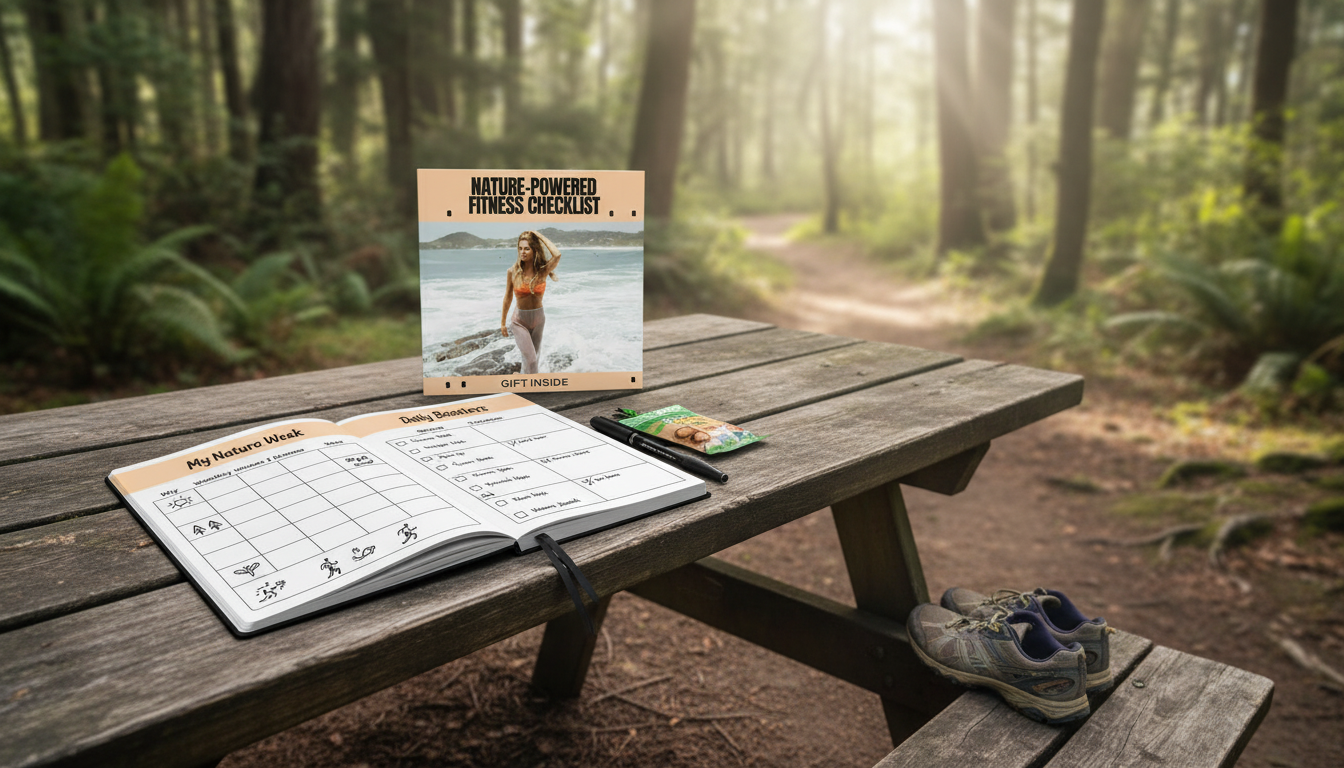
Nature-Powered Fitness, Made Practical
Outdoor movement becomes easier to start—and easier to repeat—when the plan is simple, visible, and built around real-life conditions like weather, daylight, and energy levels. A nature-powered approach pairs training basics (strength, cardio, mobility, recovery) with the added benefits of fresh air, changing terrain, and time away from screens. The goal is structure without losing the freedom of being outside: plan once, execute quickly, and track just enough to stay consistent.
What “nature-powered” fitness looks like day to day
Nature-powered training isn’t about perfect routes or epic weekend adventures (though those can be great). It’s about using outdoor time as the anchor so you keep showing up.
- Short sessions count: 10–20 minutes outside can be repeated often, building consistency with less friction.
- Terrain becomes the program: Hills add intensity, trails challenge balance, sand/grass reduce joint impact, and stairs/benches support strength work.
- Use a “minimum viable workout”: On low-motivation days, do 5–10 minutes (walk + a few moves) to protect the habit.
- Log a simple snapshot: Date, location, time outside, session type, effort (easy/moderate/hard), plus one sentence about mood or energy.
- Keep a weekly rhythm: Alternate harder and easier days, and schedule at least one true recovery day.
Key benefits that make outdoor training easier to maintain
- Mood and stress support: Many people notice better mood and lower stress when movement happens outdoors; exercise is also recognized as a stress-management tool by the American Psychological Association.
- Naturally varied intensity: Wind, heat, hills, and uneven ground create built-in progression without complicated programming.
- Better adherence: Changing scenery reduces boredom—especially when workouts feel more like a walk-and-explore than a task.
- Functional strength: Steps, inclines, carrying water, and balance demands translate to everyday capacity.
- Routine cues: Consistent outdoor time can support sleep and daily structure when it’s scheduled intentionally.
For a baseline target, the Physical Activity Guidelines for Americans and the CDC both emphasize regular movement for broad health benefits—your checklist just makes it easier to follow through.
The checklist method: plan once, execute quickly
The simplest system is the one you’ll actually use. A checklist turns decisions into defaults.
- Pick weekly targets: Example: 4 outdoor sessions, 150 minutes outside, and 2 strength-focused days.
- Choose an “anchor window”: Morning, lunch, or early evening. Build around that window instead of waiting for perfect conditions.
- Use an A/B/C plan: A = ideal session, B = shorter version, C = 5–10 minutes to keep the streak alive.
- Store a small gear kit together: Shoes, layers, water bottle, sunscreen, and a resistance band.
- Define the finish line: The session is done when the checklist is checked, not when it feels perfect.
Outdoor workout planner: simple weekly template
| Day | Session type | Time outside | Effort | Checklist focus | Notes |
|---|---|---|---|---|---|
| Mon | Strength + brisk walk | 30–45 min | Moderate | Push/pull/legs + posture | Bench step-ups, band rows, incline walk |
| Tue | Recovery walk + mobility | 20–30 min | Easy | Hips/ankles/shoulders | Stay conversational pace |
| Wed | Intervals (hills or stairs) | 20–35 min | Hard | Breathwork + pacing | 1–2 min up, walk down |
| Thu | Strength circuit (park) | 25–40 min | Moderate | Core + single-leg balance | Add carries with backpack |
| Fri | Easy nature time | 15–30 min | Easy | Consistency check-in | C-Plan allowed |
| Sat | Long hike / trail session | 45–90 min | Moderate | Endurance + nutrition | Bring water + snack |
| Sun | Rest or gentle walk | 10–20 min | Easy | Recovery | Sleep and prep gear |
Daily habit tracker: what to track (and what to ignore)
Track behaviors you can control, not outcomes that fluctuate. A short tracker reduces fatigue and keeps the focus on repeatable wins.
- Track: minutes outside, session type completed, mobility, hydration, protein/veg choice, steps (or “walk done”), and a sleep wind-down routine.
- Add one nature cue: a sunrise walk, a park loop after work, or 5 minutes of barefoot grounding on a safe surface.
- Write one sentence: “Felt energized after 10 minutes,” or “Windy—chose B-Plan and still got it done.”
- Review weekly patterns: Protect the easiest-to-win time slots first, then build around them.
Outdoor workouts to rotate (no complicated equipment)
Progress without burnout: a simple 4-week approach
Safety, comfort, and logistics for consistent outdoor training
A ready-to-use printable: planner + checklist + daily tracker in one
- Nature-Powered Fitness Checklist – Outdoor Workout Planner & Daily Habit Tracker for Nature Based Fitness Benefits (a structured weekly planner plus daily habit tracker flow).
- Diesel Women’s Uncovered Sweatshirt (an easy layer option for “dress for the first 10 minutes” days).
- Universal Baby Stroller Rain Cover with Wind & Dust Protection, Clear Windows (helpful for parents keeping walk routines consistent in wind or light rain).
Compare related options such as Nature-Powered Fitness Checklist – Outdoor Workout Planner & Daily Habit Tracker for Nature Based Fitness Benefits to match features, dimensions, and use case before choosing.
FAQ
How many days per week should outdoor workouts be scheduled to see benefits?
A practical range is 3–5 days per week, and shorter sessions still count. Aim for mostly easy/moderate days, include 1 harder day (like hills or intervals), and protect at least one true recovery day.
What if the weather ruins the plan?
Use an A/B/C plan: keep your ideal session, a shorter backup, and a 5–10 minute minimum. Try covered routes or do a short indoor strength block paired with a brief outdoor walk so consistency stays intact.
What should be tracked in a daily habit tracker for outdoor fitness?
Track controllable behaviors: minutes outside, session type completed, mobility, hydration, and a sleep wind-down routine. Add a quick weekly review note to spot patterns and make next week easier.
Recommended for you


Was this article helpful?
Yes
No









Leave a comment