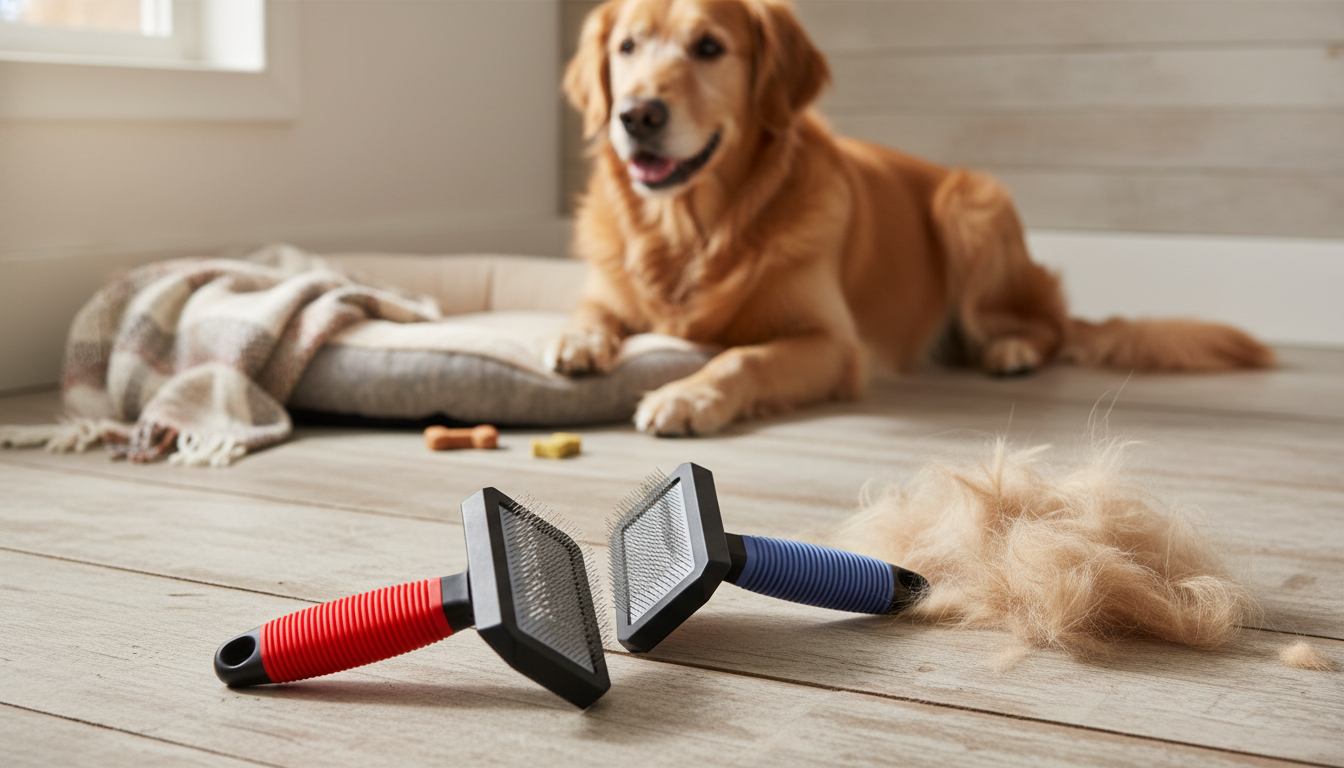
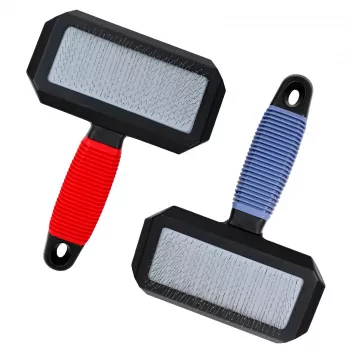
A grooming brush with long stainless steel teeth can pull loose undercoat from deeper layers while providing a gentle, skin-stimulating massage. Used correctly, it helps reduce shedding around the home, prevents tangles from tightening into mats, and keeps coats looking smooth and clean between baths. For more guidance, see Best Dog Brushes for Deshedding and Detangling (2026).
Not all pin brushes behave the same once they’re in a real coat—especially on dogs with plush topcoats or a dense underlayer. Long stainless steel teeth are designed to reach farther into the coat so you can lift out loose hair that sits below the surface without relying on harsh pressure.
Long-tooth pin brushes are most helpful for routine coat maintenance, comfort-focused brushing, and moderate de-shedding. They’re not automatically the best choice for every coat type or every situation.
| Coat type | Goal | Suggested frequency | Notes |
|---|---|---|---|
| Double coat (dense undercoat) | Reduce shed, lift undercoat | 2–4x per week during shedding; 1–2x otherwise | Work in sections; stop if skin reddens |
| Long straight/silky | Prevent tangles, remove loose hair | Every other day or daily | Finish with a comb to check for snags |
| Medium coat | General maintenance | 1–2x per week | Focus on friction areas (collar, behind ears) |
| Short coat | Reduce shedding | 1x per week | Light pressure; consider rubber tools for speed |
The goal is to remove loose hair and lightly stimulate the skin—without scraping. A few technique changes usually make the difference between “my dog hates brushing” and “my dog tolerates it.”
If you want a quick background on why shedding spikes and what’s normal, the American Kennel Club’s overview is a helpful reference: AKC: Dog Shedding — Why It Happens and What to Do. For general grooming fundamentals, see ASPCA: Grooming Your Dog.
A long-tooth pin brush can be more than a de-shedding helper—it can become part of a calm routine. Comfort matters because a relaxed dog allows better coat access, which reduces tugging and breakage.
| Item | Details |
|---|---|
| Name | Dog Grooming Brush with Long Stainless Steel Teeth for Shedding & Massage |
| Price | 2.51 USD |
| Availability | In stock |
| Product page | View product |
It can handle regular maintenance and lift a good amount of loose hair, especially between baths. During heavy seasonal shedding on dense double coats, an undercoat rake may remove packed undercoat faster, so many owners use both depending on the week and the dog’s comfort.
Most dogs do well with 1–2 sessions per week, while double coats often benefit from 2–4 sessions weekly during coat blow. Consistency matters more than long sessions—stop and reduce frequency if you notice redness or sensitivity.
Yes, when used with light pressure, short sessions, and careful avoidance of inflamed areas. Check the pins regularly for bends or sharp edges, and consult a veterinarian if skin irritation persists or you suspect an underlying condition.






Leave a comment