Fresh Kitchen Drains: Find the Odor Source, Clean It Fast, Keep It Gone
Kitchen sink odors usually come from a few predictable spots—built-up food film, a dry trap, gunk in the disposal, or venting and plumbing issues. The good news: most smells can be pinpointed quickly, cleaned safely with basic supplies, and prevented with small, repeatable habits that keep the whole kitchen smelling clean.
Why kitchen drains start to smell
Most drain odors aren’t “mystery smells.” They’re the result of organic buildup plus moisture and time. Common culprits include:
- Biofilm: a thin, sticky layer of food residue and bacteria that clings to pipe walls and strainers.
- Grease buildup: cooking oils and fats cool inside the drain, trapping particles that turn rancid.
- Garbage disposal splash zone: especially under the rubber baffle and inside the grinding chamber where residue collects.
- Dry P-trap: in a rarely used sink, the water seal can evaporate and allow sewer gas to enter the room.
- Blocked or poorly vented plumbing: slow drainage concentrates odors and can cause gurgling.
- Overflow openings and sink seams: grime and mildew can build where water splashes and air doesn’t circulate.
For background on how traps and vents are designed to block sewer gases, InterNACHI’s overview of plumbing traps and vents is a helpful reference.
Quick odor check: narrow it down in 3 minutes
Before you start pouring anything down the drain, locate the strongest source. A quick diagnostic saves time and avoids treating the wrong spot.
- Smell separate zones: the drain opening, the overflow hole (if present), and the disposal opening.
- Run hot water for 20–30 seconds: if the odor briefly improves then returns, buildup is likely.
- Listen after draining: gurgling can suggest venting problems or a partial blockage.
- Check how it drains: slow drainage or standing water often means decomposing debris is sitting in a clog.
- Think about timing: if it’s worst after the sink sits unused for days, suspect a dry or compromised trap seal.
Common odor clues and what they usually mean
| Clue |
Most likely cause |
Fast next step |
| Rotten-food smell strongest at drain opening |
Biofilm/food residue in drain or strainer |
Remove strainer, scrub, then flush with hot water |
| Odor strongest inside disposal |
Buildup under baffle or in disposal chamber |
Clean baffle and disposal with brush + mild soap |
| Sulfur/sewer smell, especially after not using sink |
Dry P-trap or poor trap seal |
Run water to refill trap; inspect trap for leaks |
| Gurgling + slow drain |
Partial blockage or venting issue |
Try mechanical cleaning; consider plumber if persistent |
| Musty smell near overflow or faucet base |
Mildew in overflow channel or seams |
Brush overflow with soapy water; rinse thoroughly |
Easy cleaning routine (safe, low-fuss, no special tools)
This routine is designed to remove the stuff that actually holds odor—film and residue on surfaces—without harsh mixing or complicated equipment.
- Start with the basics: remove and wash the strainer/stopper with dish soap. Use an old toothbrush for crevices and underside edges.
- Flush with very hot water: run hot tap water to soften grease and move loosened debris.
- Clean the disposal baffle: lift the rubber flap and scrub the underside where slime collects (this spot is often the main offender).
- Brush the drain opening: scrub the drain opening and the first few inches of pipe with a narrow bottle brush if accessible.
- Deodorize gently: add baking soda, then vinegar, allow brief fizzing, and rinse well afterward with hot water.
- Keep it safe: avoid mixing cleaning chemicals; never combine bleach with acids (like vinegar) or ammonia products.
For general guidance on safer cleaning habits and reducing exposure to irritants, see the EPA’s Indoor Air Quality resources and the CDC’s overview of cleaning and disinfecting.
Deeper clean for recurring odors (weekly reset)
If smells come back quickly, the fix is usually deeper and more mechanical: scrubbing beats “foaming reactions” alone because biofilm clings like a thin, invisible skin.
Smart prevention that actually sticks
When DIY fixes aren’t enough
A simple checklist you can keep on your phone
- Keep it short: identify the source, scrub the right spot, flush well, then prevent with small weekly habits.
- Use a repeatable order: strainer → drain opening → disposal baffle → overflow → under-sink check.
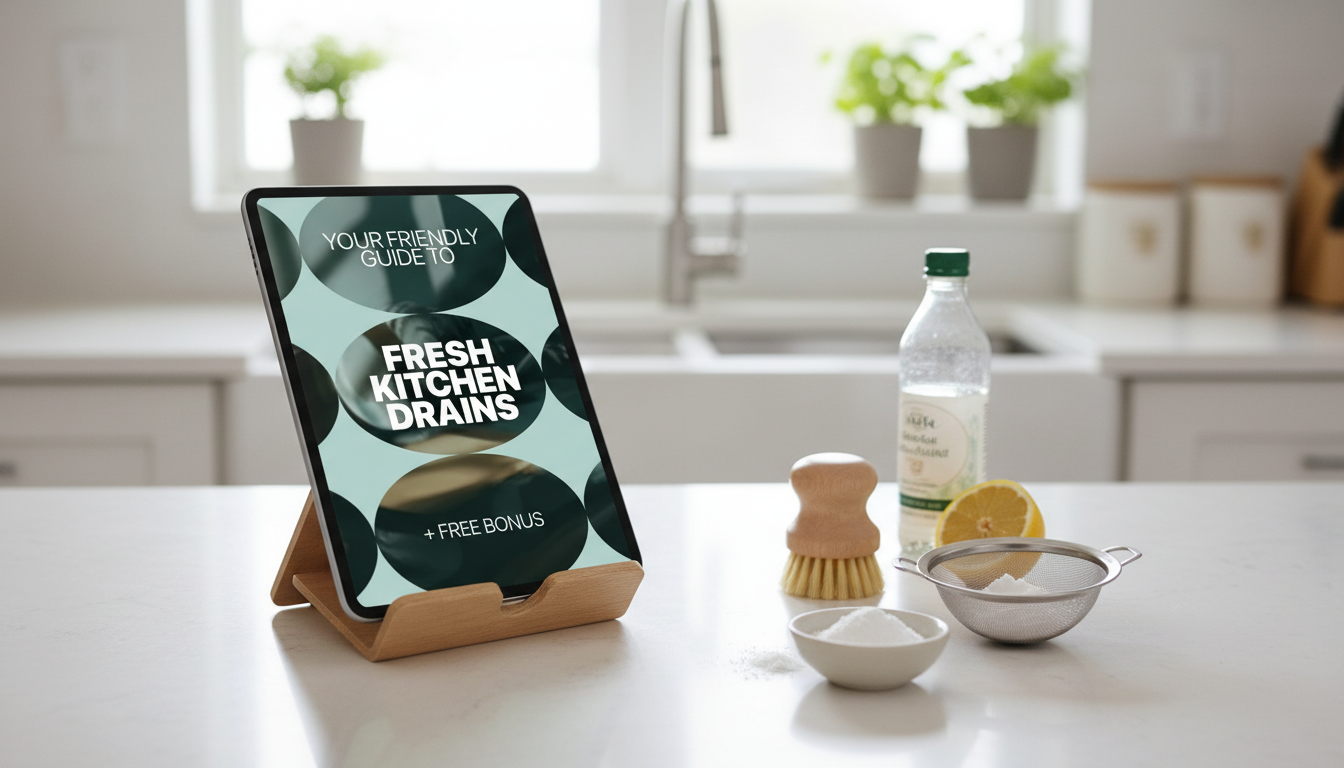
- Need a step-by-step, printable-friendly walkthrough? Check out Your Friendly Guide to Fresh Kitchen Drains for a practical digital guide focused on odor causes, easy cleaning steps, and prevention routines.
Shop helpful home guides
FAQ
Why does my kitchen sink smell even after running hot water?
Hot water can temporarily reduce odor, but it won’t remove biofilm and residue clinging to the strainer, drain opening, or disposal baffle. Scrubbing those surfaces and rinsing thoroughly is usually what makes the smell stop for good.
Is it safe to use baking soda and vinegar in the kitchen drain?
Used separately and followed by a thorough rinse, they’re generally safe for routine deodorizing. Don’t mix them with bleach or other cleaners, and rely on brushing/scrubbing for the best removal of buildup.
What causes a sewer-gas smell from the kitchen sink?
A dry P-trap, a weak trap seal, or venting issues can let sewer gas into the home. Run water to refill the trap; if the smell returns quickly or gurgling persists, inspect for leaks and consider a plumber.
Recommended for you







Leave a comment