Indoor cats thrive when their day includes hunting-style play, climbing, scratching, cozy rest zones, and small doses of novelty. A simple checklist makes enrichment feel doable: quick daily wins, weekly rotations, and a few home setup upgrades—so boredom, stress behaviors, and inactivity are less likely to take hold.
Cats are built to stalk, chase, climb, scratch, and observe their territory. When those needs don’t have an outlet indoors, many cats improvise—often in ways that look like “bad behavior,” but are really unmet instincts.
For evidence-based guidance on feline environmental and behavior needs, see the American Association of Feline Practitioners (AAFP) Feline Behavior Guidelines and resources from International Cat Care.
The goal is consistency, not marathon play sessions. Two short bursts of interactive play plus a foraging moment can make an indoor day feel “complete” to a cat.
| Enrichment type | Examples | Time | Best for |
|---|---|---|---|
| Predatory play | Wand toy, feather teaser, ribbon chase | 5–10 min | High-energy cats, young cats |
| Foraging | Puzzle feeder, treat balls, kibble scatter | 3–8 min | Food-motivated cats, indoor-only cats |
| Climbing & surveying | Cat tree, shelves, window perch | Anytime | Confident cats, multi-cat homes |
| Scratching | Vertical post, horizontal pad, cardboard scratcher | Anytime | Redirecting furniture scratching |
| Calm enrichment | Brush session, lick mat, soft hideaway | 3–10 min | Shy, anxious, senior cats |
Indoor cats enjoy “newness,” but too many changes at once can be stressful—especially for cautious cats. A gentle rotation schedule keeps the home interesting without feeling unpredictable.
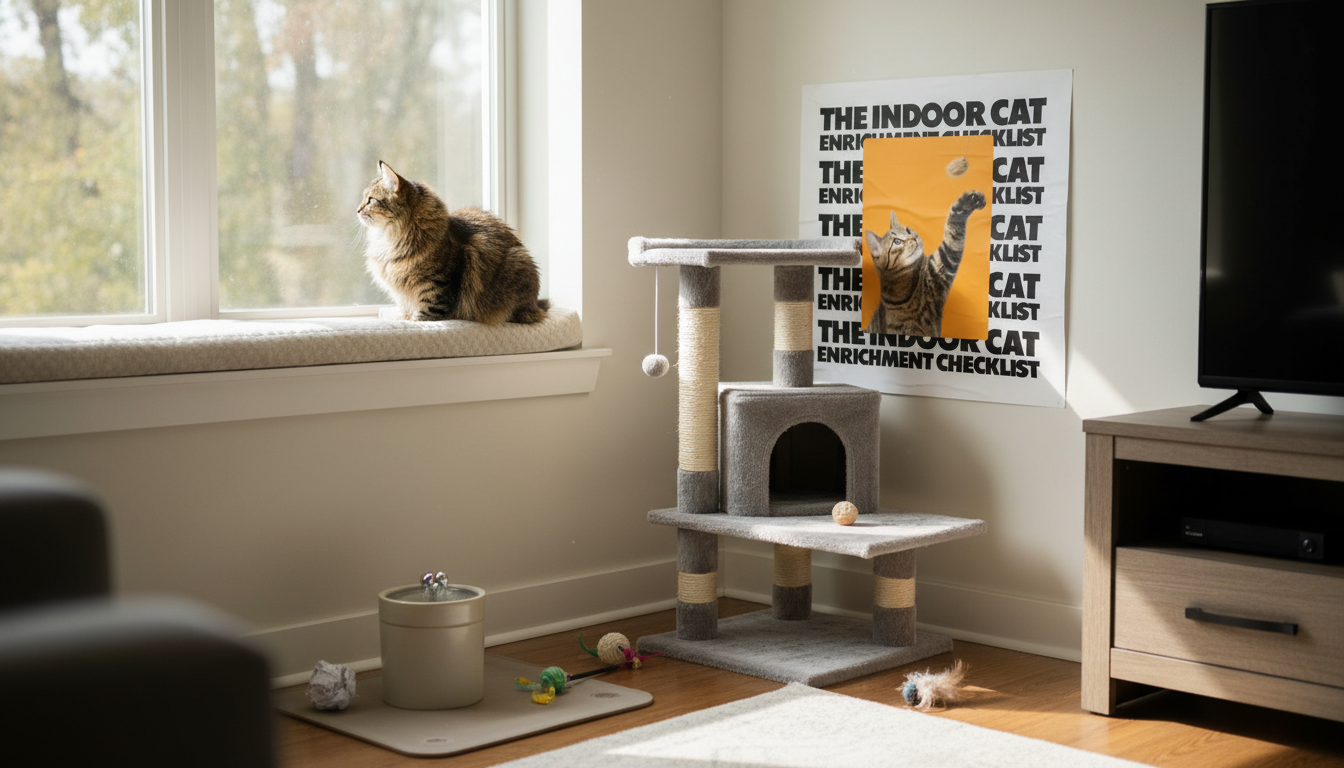
The best enrichment “sticks” when the home itself supports natural behaviors. Think in zones: up-high travel routes, scratch stations, lookouts, and quiet retreats.
If you need more ideas on safe, practical ways to enrich an indoor environment, the ASPCA guide to enriching your cat’s life offers helpful activity categories to build from.
Food is a powerful enrichment tool because it taps into the foraging sequence: seek, sniff, paw, and “capture.” Even small changes can increase daily movement without adding extra calories.
Indoor cat enrichment checklist is a ready-to-print option designed to make daily and weekly enrichment easier to follow and repeat.
For caregivers who like to track habits and stay consistent day-to-day, a simple routine tracker can also help support follow-through alongside cat care tasks. Consider pairing your cat routine with Nature-Powered Fitness Checklist – Outdoor Workout Planner & Daily Habit Tracker to keep your own schedule steady (which often helps cats, too, since many prefer predictable rhythms).
Most indoor cats do well with two short interactive sessions of about 5–10 minutes each, adjusted for age, health, and energy level. End with a “catch,” then offer a small snack or meal to complete the hunt–eat routine.
Try food puzzles, sniff-and-find games, window perches, and brief treat-based training. Also experiment with toy styles—some cats prefer ground “prey” they can stalk, while others like “air prey” that flutters and escapes.
Place multiple scratchers (vertical and horizontal) in the areas your cat already targets, reward the right choice, and reduce excess energy with play and foraging. Consistent scratch options plus daily movement often lowers stress-driven scratching.






Leave a comment