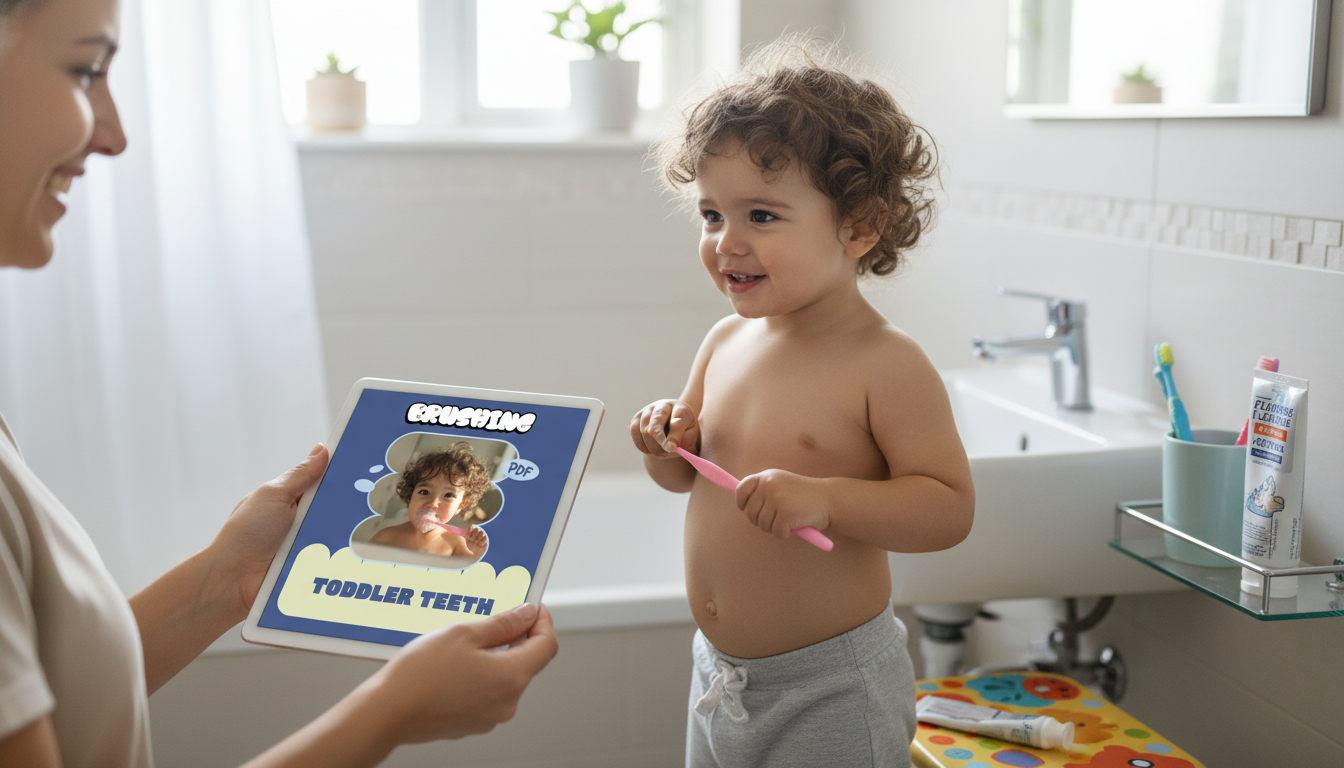
Toddler toothbrushing can feel like a daily negotiation, but a simple routine—done the same way, at the same times—builds cooperation and protects new teeth from early cavities. The goal isn’t a perfect, photo-ready brushing session; it’s a steady habit that keeps plaque off the gumline and fluoride on the teeth, especially before sleep.
Baby teeth do more than fill out a cute grin. They help toddlers chew comfortably, support speech development, and hold space for adult teeth. When cavities start early, they can spread quickly because toddler enamel is thinner and many kids snack often throughout the day.
Brushing twice daily with the right amount of fluoride toothpaste is one of the most protective habits you can build. Night brushing matters most because saliva flow naturally drops during sleep, so food residue and acids linger longer. For additional guidance on fluoride’s role in preventing decay, see the American Academy of Pediatric Dentistry (AAPD) recommendations.
Start cleaning as soon as the first tooth appears. Before teeth erupt, gently wipe gums with a soft, damp cloth after feeds. Once teeth are in, a tiny amount of fluoride toothpaste and a soft toddler brush are enough to begin.
Expect phases: refusal, biting the brush, wanting to “do it alone,” and sudden cooperation that disappears the next day. Routine is what keeps progress steady through each phase. Plan for parent-led brushing well into the preschool years—toddlers can practice independence, but most still need an adult to finish and check the back teeth.
Choose a small, soft-bristled toothbrush with a compact head to reach back molars without triggering gagging. Replace it about every three months, or sooner if the bristles splay. Use fluoride toothpaste unless your dentist advises otherwise; fluoride strengthens enamel and helps prevent decay. Spitting is great when it happens, but it’s normal for toddlers to swallow small amounts—using the correct smear or pea-sized amount keeps exposure appropriate. The CDC’s children’s oral health guidance offers helpful, practical reminders for daily prevention.
| Age | Toothpaste amount | Who brushes | Goal for the routine |
|---|---|---|---|
| 0–12 months (first tooth) | Smear (rice-grain size) fluoride toothpaste | Parent | Gentle introduction; clean all erupted teeth |
| 1–3 years | Smear (rice-grain size); some guidance allows up to pea-size closer to 3 if reliably spitting | Parent leads; child “helps” | 2 minutes twice daily; build cooperation |
| 3–6 years | Pea-size fluoride toothpaste | Child practices; parent finishes/inspects | Consistent technique; reduce missed back teeth and gumline plaque |
Good technique is less about fancy tools and more about visibility and consistency. Pick a position that gives you a clear view:
To reduce arguments, start where tolerance is highest (often the front teeth), then move quickly to back molars before the “done!” moment hits. Angle bristles toward the gumline and use small circles. Aim for outside surfaces first, then inside surfaces, then chewing surfaces. Spend extra time on the back molars and along the gumline—common cavity zones.
If teeth are touching, add flossing once daily (ideally at night). Kids’ floss picks can be easier than string floss when you’re working in a squirmy mouth.
Predictability is what turns brushing from a debate into a habit. Use the same place, the same steps, and the same short script every time.
After breakfast: “First we brush, then we rinse.” Keep it quick and consistent. If possible, reduce grazing afterward so acids and sugars aren’t constantly reintroduced.
If you’d like a ready-to-follow routine with playful prompts and practical tools, see Brushing Toddler Teeth – A Parent’s Guide on How to Brush Toddler Teeth Well | Easy Daily Routine, Fun Brushing Tips & Smart Tools.
For families building calmer mornings and evenings overall, a simple environment refresh can support routines too (like creating a consistent getting-ready space). Creative Kids’ Room Decorating Made Easy | How to Decorate Kids Rooms Affordably | DIY Children’s Bedroom Ideas, Budget Home Decor Guide, Printable eBook includes budget-friendly ideas that can help make daily transitions feel more predictable.
For everyday brushing and flossing fundamentals, the American Dental Association (ADA) brushing and flossing overview is a reliable reference.
Aim for about 2 minutes twice a day. If tolerance is low, build up gradually, but prioritize back molars and the gumline—especially at night.
Use a smear (rice-grain size) of fluoride toothpaste for most toddlers under 3. Move to a pea-size around age 3 when they can reliably spit.
Use consistent positioning, offer limited choices (brush color or song), start where they tolerate best, and use a timer or two-minute song. Keep the routine calm and non-negotiable while praising cooperation.






Leave a comment